
Practice Update - 2 March 2021
Ian Campbell • 12 May 2021
Changes to STP reporting concessions from 1 July 2021
Small employers (19 or fewer employees) are currently exempt from reporting ‘closely held’ payees through Single Touch Payroll ('STP'). Also, a quarterly STP reporting option applies to micro employers (four or fewer employees). These concessions will end on 30 June 2021.
The STP reporting changes that apply for these employers from 1 July 2021 are outlined below.
Closely held payees (small employers)
From 1 July 2021, small employers must report payments made to closely held payees through STP using any of the options below. Other employees must continue to be reported by each pay day.
A ‘closely held payee’ is an individual who is directly related to the entity from which they receive payments. For example, this could include family members of a family business, directors or shareholders of a company and beneficiaries of a trust.
Payments to such payees can be reported via STP (from 1 July 2021) using any of the following options:
1. Report actual payments on or before the date of payment.2. Report actual payments quarterly on or before the due date for the employer’s quarterly activity statements.3. Report a reasonable estimate quarterly on or before the due date for the employer’s quarterly activity statements. Note that consequences may apply for employers that under-estimate amounts reported for closely held payees.
Small employers with only closely held payees have up until the due date of the payee’s tax return to make a finalisation declaration. Employers will need to speak with these payees about when their individual income tax return is due.
Micro employers
From 1 July 2021, the quarterly reporting concession will only be considered for eligible micro employers experiencing ‘exceptional circumstances’.
Common examples of when the ATO would generally consider it to be fair and reasonable to grant a deferral due to exceptional or unforeseen circumstances include natural disasters, other disasters or events, serious illness or death.
Additionally, ‘exceptional circumstances’ for access to the STP quarterly reporting concession from 1 July 2021 may include where a micro employer has:
seasonal or intermittent workers; or no or unreliable internet connection.
The ATO says it will consider any other unique circumstances on a case-by-case basis.
It should be noted that registered agents must apply for this concession and lodge STP reports, quarterly, on behalf of their eligible micro employer clients.
The STP reports are due the same day as the employer’s quarterly activity statements.
If an employer prefers to report monthly, the STP reports must be lodged on or before the 21st day of the following month.
Finalisation declarations will need to be submitted by 14 July each year.
Editor: Please contact our office if you require more information or assistance with these STP reporting options.
Paper PAYG and GST quarterly instalment notices
The ATO has previously advised that it will no longer issue paper activity statements after electronic lodgment. Instead, electronic activity statements will be available for access online, three to four days after the activity statement is generated.
As part of its digital improvement program, the ATO stopped issuing paper quarterly PAYG and GST instalment notices (forms R, S & T), where taxpayers had a digital preference on ATO systems. The September 2020 notice was the last one issued to these taxpayers.
However, the ATO has received feedback from tax professionals that issues have arisen for some of their clients as a result of this change. For example, some taxpayers who are self-lodgers rely on the receipt of the paper statements as a reminder that their instalments are due.
As an interim solution, the ATO said it will issue paper PAYG and GST quarterly instalment notices starting with the March 2021 quarterly notices.
For taxpayers impacted by this change, the ATO will work with their registered agents to take their circumstances into account. The ATO has a range of practical support options available, including lodgment deferrals and payment plans that agents can access online, on behalf of their clients.
For self-lodgers, the ATO has issued an email notification reminding them that their December 2020 PAYG and GST instalment notices are due for payment soon (by 2 March 2021).
The ATO said it will continue to work with the tax profession to develop a digital solution for the PAYG and GST instalment notices that is workable for registered agents and their clients.
Editor: Please contact our office if you require more information about paper PAYG or GST quarterly instalment notices.
Avoiding disqualification from SG amnesty
The superannuation guarantee (‘SG’) amnesty ended on 7 September 2020. Employers who disclosed unpaid SG amounts and qualified for the amnesty are reminded that they must either pay in full any outstanding amounts they owe, or set up a payment plan and meet each ongoing instalment amount so as to avoid being disqualified and losing the benefits of the amnesty.
The ATO will be sending employers reminders to pay disclosed amounts, if they have not previously engaged with the ATO. Employers will have 21 days to avoid being disqualified from the amnesty.
Registered agents can assist their employer clients who qualified for the SG amnesty avoid disqualification. In particular, if a client needs to set up a payment plan, agents can do this (online) on their behalf, if the employer:
has an existing debit amount under $100,000 (total balance or overdue amounts); does not already have a payment plan for that debit amount; and has not defaulted on a payment plan for the relevant account more than twice in the past two years.
The ATO has advised that employers who are disqualified from the amnesty will:
be notified in writing of the quarter they are disqualified for; be charged an administration component of $20 per employee for each disqualified quarter; have their circumstances considered when deciding a Part 7 penalty remission (this is an additional penalty of up to 200% of the unpaid SG amount that may be imposed under the SG laws); and be issued with a notice of amended assessment.
Employers who continue to qualify for the SG amnesty are reminded that they can only claim a tax deduction for amounts paid on or before 7 September 2020 (i.e., the amnesty end date).
Editor: Please contact our office if you require more information or would like us to set up a payment plan for SG amnesty amounts on your behalf.
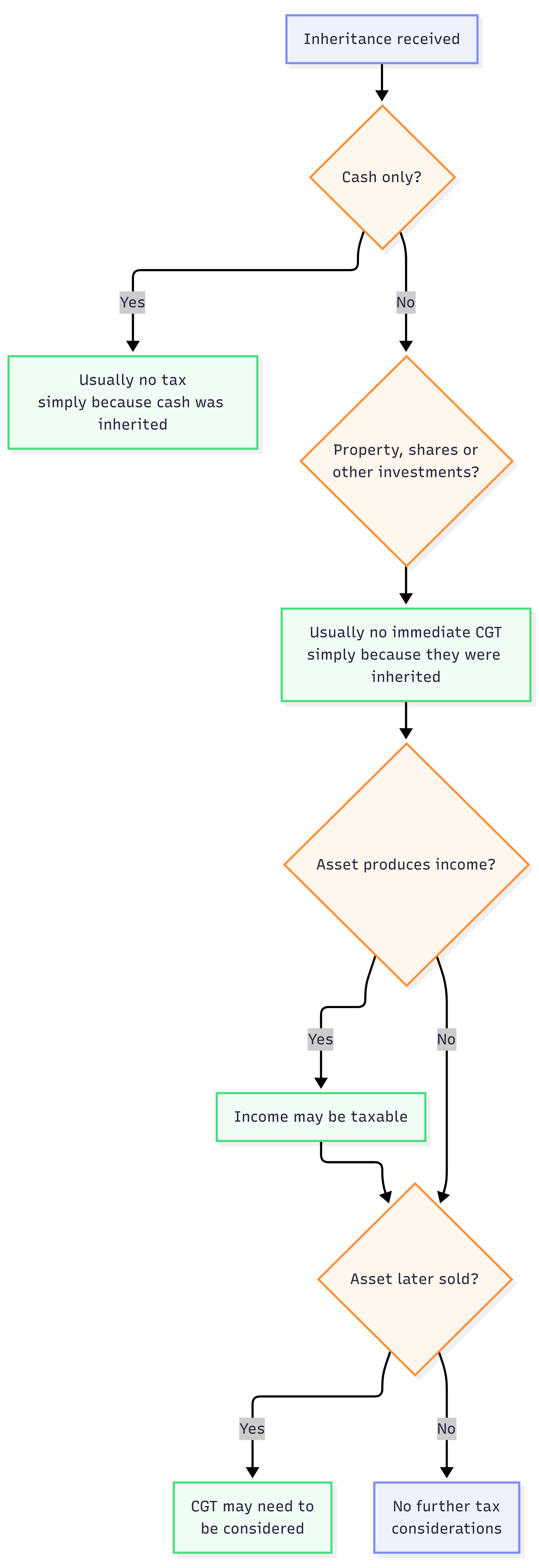
Australia has no inheritance tax. So why can an inheritance still create a tax bill?
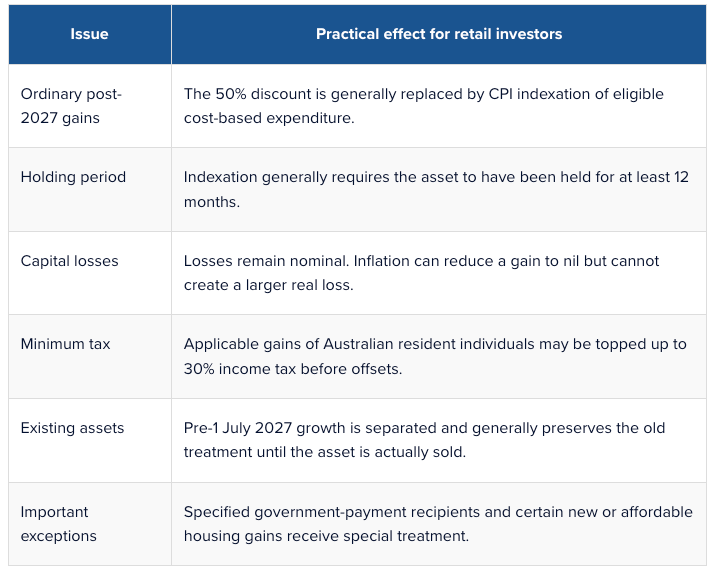
New CGT rules from 1 July 2027 The new rules at a glance
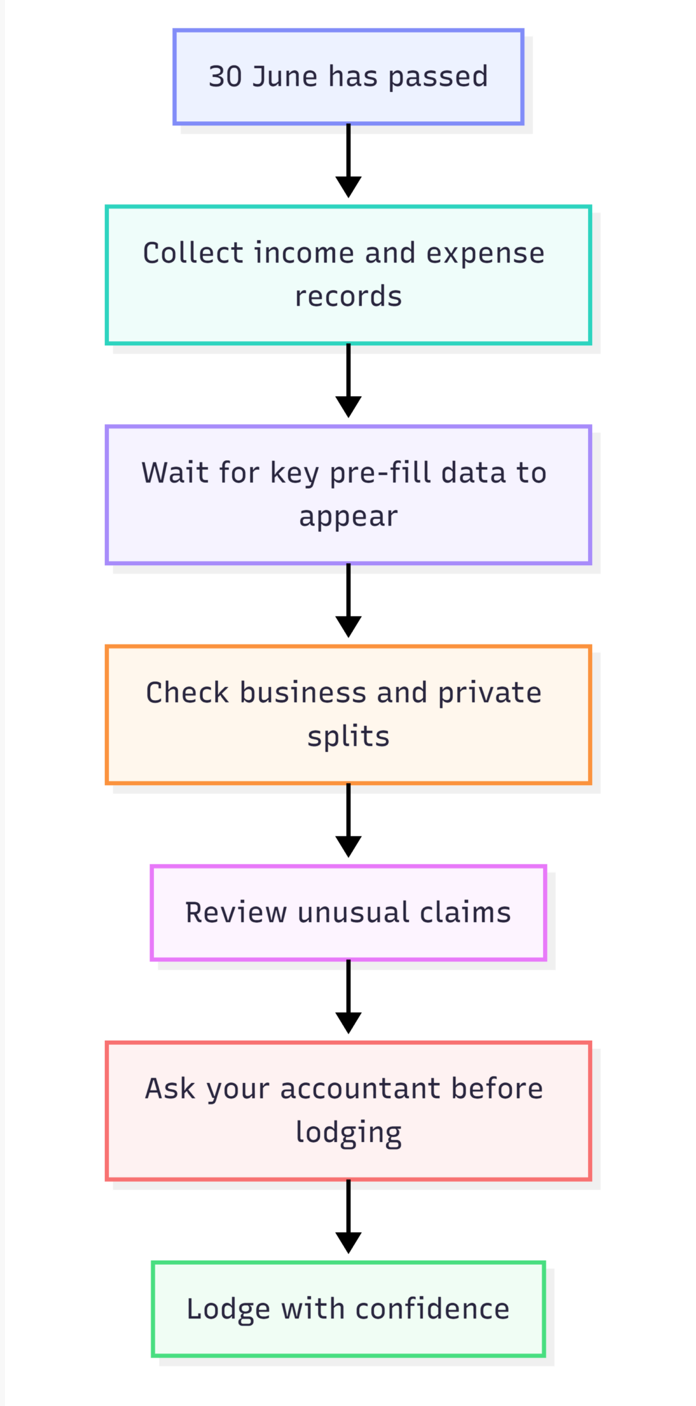
Tax time 2026: prepare before you lodge, not after the ATO asks The 2025–26 financial year has now ended. For many individuals, sole traders and small business owners, the first instinct after 1 July is to lodge quickly and wait for a refund. That can be tempting, but it is not always the best approach. This year, a safer approach is to slow down, check the records, confirm that pre-filled information is complete, and make sure any deductions are supported before lodgement. The Australian Taxation Office has access to more data than many people realise. It can compare your tax return with information from employers, banks, share registries, crypto exchanges, digital platforms, property managers and other third-party sources. Most tax issues do not arise because clients are trying to do the wrong thing. They often arise because income is forgotten, expenses are estimated, business and private costs are mixed, or records are not available when the ATO asks questions months later. This newsletter outlines the areas the ATO is likely to question in 2026 and what you can do now, after 30 June, to prepare properly. Why rushing after 1 July can create problems Lodging early can be useful if your records are simple and complete. However, many tax returns are not complete in the first few days of July. Employers, banks, health funds, government agencies, share platforms and investment providers may still be finalising their reporting. If you lodge before all information is available, you may miss income or claim deductions against incomplete data. That can lead to amendments, delays, ATO questions, interest charges or penalties. A better post-30 June approach